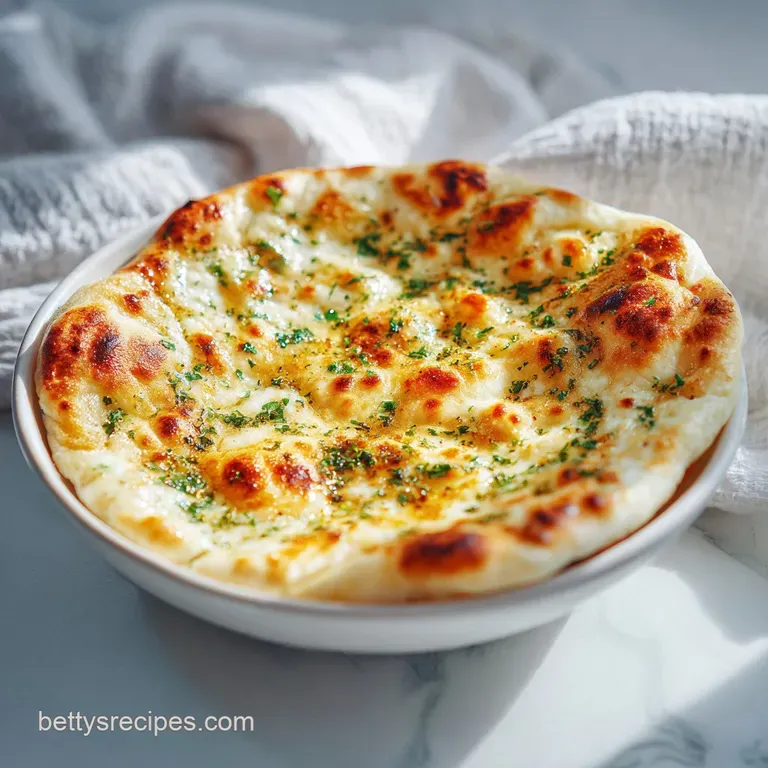
No-Yeast Garlic Flatbread: Soft and Golden
- Time:5 minutes active + 45 minutes resting/cooking = 50 minutes total
- Flavor/Texture Hook: Charred, bubbly, and pillowy with a punchy garlic kick
- Perfect for: Spontaneous curry nights or last minute taco cravings
- Easy Garlic Flatbread Recipe No Yeast
- Why This Works
- Essential Cooking Specifications
- Understanding the Ingredients
- Tools for Minimalist Cooking
- Step by Step Instructions
- Common Mistakes and Fixes
- Scaling Your Dough Batch
- Debunking Bread Myths
- Creative Flavor Variations
- Storing and Using Scraps
- Serving Ideas for Flatbread
- Recipe FAQs
- 📝 Recipe Card
Easy Garlic Flatbread Recipe No Yeast
There is something hypnotic about the smell of garlic butter hitting a hot, charred piece of dough. I remember the first time I tried making this. I had a massive bowl of spicy lentil soup ready, but my bread box was tragically empty.
I didn't have two hours to wait for yeast to bloom and dough to rise, so I grabbed a tub of Greek yogurt and hoped for the best. The result was a revelation of bubbles and soft texture that I actually prefer over many yeast based versions now.
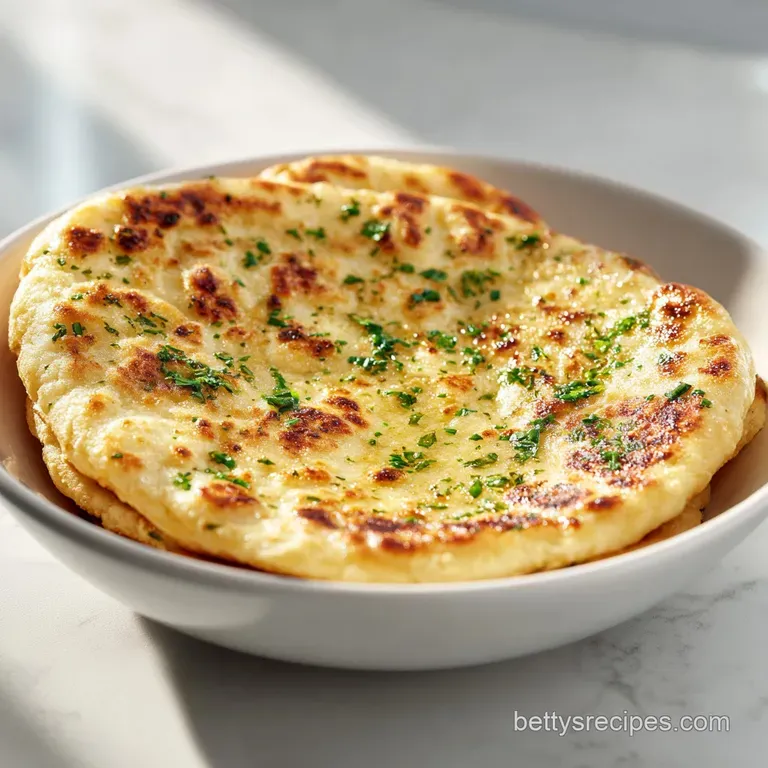
This method is all about the Greek yogurt. It isn't just a liquid; it's the structural backbone that keeps everything moist while providing the acidity needed to get some lift. You'll see those beautiful leopard spots develop on the surface within 60 seconds of hitting the pan, and that sizzle is your cue that the bread is doing exactly what it should.
We aren't going for a crusty sourdough here; we want something flexible, velvety, and ready to mop up every drop of sauce on your plate.
The best part is how forgiving it feels. You don't need a stand mixer or a degree in fermentation. If you can stir a spoon and roll a pin, you can master this. It’s a joyful, low stress way to bring fresh bread to the table on a random Tuesday night without the technical fuss.
We’re going to focus on getting that pan temperature just right and letting the dough rest so it doesn't snap back like a rubber band when you roll it.
Why This Works
The magic of this dough comes down to how we bypass the fermentation process entirely. By using specific ingredients that react instantly, we create air pockets that would normally take hours to develop.
- Acidic Lift: The lactic acid in the Greek yogurt reacts immediately with the baking powder, creating tiny bubbles of carbon dioxide that expand when they hit the hot skillet.
- Protein Softness: Yogurt contains softened proteins and fats that interfere with long gluten strands, resulting in a bread that stays tender rather than becoming tough or chewy.
- Hydration Balance: Full fat yogurt provides a high moisture content without making the dough liquid, allowing us to use less oil while maintaining a silky crumb.
- Gluten Relaxation: A 30 minute rest period allows the flour to fully hydrate and the gluten proteins to "relax," which means your flatbread stays flat and doesn't shrink back during rolling.
| Method | Time | Texture | Best For |
|---|---|---|---|
| Cast Iron Skillet | 15 minutes | Charred and pillowy | Traditional "naan" style bubbles |
| Non Stick Pan | 15 minutes | Evenly golden | Beginners who fear sticking |
| Outdoor Grill | 10 minutes | Smoky and crisp | Summer BBQs and large groups |
The choice of cooking method really changes the final vibe of the bread. While a skillet gives you those classic dark spots and a soft interior, a grill adds a layer of wood fired flavor that is hard to beat.
Just make sure whatever surface you use is screaming hot before the dough touches it, otherwise, you'll end up with a dry, cracker like result instead of a soft wrap.
Essential Cooking Specifications
Before you start tossing flour around, let’s look at what is actually happening inside that bowl. Understanding the components helps you adjust if the weather is humid or your kitchen is particularly dry.
| Component | Science Role | Pro Secret |
|---|---|---|
| All Purpose Flour | Provides structure | Weigh it for consistent dough every single time |
| Greek Yogurt | Moisture and acid | Use room temperature yogurt to help the dough bond |
| Baking Powder | Chemical leavening | Ensure it is fresh so the bread actually puffs |
| High Heat | Instant expansion | Wait for the pan to smoke slightly before starting |
Understanding the Ingredients
For this easy garlic flatbread recipe no yeast, the ingredients are humble but specific. Substituting blindly can lead to a dough that is either too sticky to handle or too dry to roll.
- 250g all purpose flour: This provides the perfect middle ground protein content.
Why this? Bread flour makes it too chewy; cake flour makes it too fragile.
- Substitute: 1:1 gluten-free all purpose blend (look for one with xanthan gum).
- 1.5 tsp baking powder: This is our engine for growth.
Why this? It provides the immediate lift that yeast usually provides over hours.
- Substitute: 0.5 tsp baking soda plus an extra splash of lemon juice.
- 0.5 tsp fine sea salt: Essential for flavor.
Why this? Salt strengthens the gluten structure while making the flour taste like bread.
- Substitute: Standard table salt, but use slightly less.
- 190g full fat Greek yogurt: The hero of the dish.
Why this? The thickness ensures the dough isn't too wet while the fat adds richness.
- Substitute: Sour cream or thick coconut yogurt for a dairy-free version.
- 1 tbsp olive oil: Adds a bit of elasticity.
Why this? It helps the dough feel smooth and prevents it from sticking to your hands.
- Substitute: Avocado oil or melted ghee.
- 4 tbsp unsalted butter: For the finishing glaze.
- Substitute: Extra virgin olive oil for a vegan friendly finish.
- 3 cloves fresh garlic, minced: The flavor punch.
- Substitute: 1 tsp garlic powder mixed into the dough if you're out of fresh.
- 1 tbsp fresh parsley, finely chopped: For color and freshness.
- Substitute: Fresh cilantro or dried oregano.
- 0.5 tsp flaky sea salt: For that final crunch.
- Substitute: Kosher salt.
Tools for Minimalist Cooking
You don't need much to get this done, which is why I love it for busy weeknights. A large mixing bowl and a sturdy spoon will get your dough together in no time. For rolling, a heavy rolling pin is great, but honestly, I've used a clean wine bottle in a pinch when I was cooking at a friend's place.
The most important tool is your pan. A cast iron skillet, such as a Lodge, is the gold standard here because it holds heat like a beast. If you use a thin stainless steel pan, the temperature will drop the second the cold dough hits it, and you won't get those characteristic bubbles. If you're looking for a dessert to follow this savory bread, a Chocolate Swiss Roll Cake is a fantastic project that uses many of these same basic pantry staples.
step-by-step Instructions
- Whisk the dry. In a large mixing bowl, whisk together the 250g all purpose flour, 1.5 tsp baking powder, and 0.5 tsp fine sea salt until evenly distributed. Note: Whisking breaks up lumps and ensures the baking powder is everywhere.
- Add the wet. Pour in the 190g full fat Greek yogurt and 1 tbsp olive oil. Stir with a sturdy spoon until a shaggy, cohesive dough ball forms.
- Knead the dough. Turn the dough onto a lightly floured surface and knead gently for 1–2 minutes until the surface is relatively smooth. Note: Don't overwork it; we just want it to hold together.
- Rest the gluten. Wrap the dough in plastic wrap or cover with a damp cloth and let it rest at room temperature for 30 minutes. Do not skip this, as it allows the dough to relax for easier rolling.
- Divide and roll. Cut the rested dough into 6 equal portions. Use a rolling pin to stretch each ball into an 8 inch flat circle until thin enough to see light through.
- Heat the skillet. Preheat a cast iron skillet over high heat. Wait until you see a faint wisp of smoke.
- Sear the bread. Cook each flatbread for 1-2 minutes per side. You will know it's ready when dark charred spots appear and the bread puffs up.
- Prepare the glaze. Melt the 4 tbsp unsalted butter in a small bowl. Stir in the 3 minced garlic cloves and chopped parsley.
- Brush and finish. Brush the warm flatbreads generously with the garlic infusion and finish with a sprinkle of flaky sea salt.
Common Mistakes and Fixes
One of the biggest hurdles beginners face is the dough feeling too sticky. If you find the dough clinging to your fingers like glue, don't panic. This usually happens if your yogurt is a bit thinner than a traditional Greek style. Just add a tablespoon of flour at a time until it's manageable.
It should feel "tacky" (like a post it note) but not leave residue on your skin.
Fixing Snap Back Dough
If you try to roll your 8 inch circle and it keeps shrinking back to 4 inches, your gluten is too tight. This happens if you skipped the 30 minute rest or if you handled the dough too aggressively during the dividing stage. Cover it back up and give it another 10 minutes of peace.
Time is the only thing that will fix a stubborn dough.
| Problem | Root Cause | Solution |
|---|---|---|
| Bread is hard/dry | Cooked too long on low heat | Increase heat and reduce cook time |
| No bubbles forming | Skillet wasn't hot enough | Wait for the pan to smoke before adding dough |
| Garlic tastes bitter | Garlic burnt in the butter | Add garlic to warm (not boiling) butter |
- ✓ Always weigh your flour for accuracy (cups can vary by 20%).
- ✓ Keep the rolled flatbreads covered with a towel while you cook the others to prevent drying.
- ✓ Use a high smoke point oil if you feel the need to grease the pan, though dry is usually better.
- ✓ Don't pile them up immediately without a towel between them if you want them to stay soft.
- ✓ Ensure your baking powder hasn't expired by testing a pinch in hot water (it should bubble).
Scaling Your Dough Batch
If you’re feeding a crowd, you can easily double this recipe. However, keep in mind that when you scale up, the flour to liquid ratio can sometimes drift. Use a kitchen scale for the best results.
For a double batch, use 500g flour and 380g yogurt, but keep the salt and baking powder to about 1.5x the original amount (around 2.25 tsp baking powder and 0.75 tsp salt) to avoid a chemical aftertaste.
When scaling down for a solo dinner, just halve everything. Since the recipe uses yogurt rather than a whole egg, it’s one of the easiest recipes to divide without any awkward leftovers. If you have extra flatbreads, they make an incredible base for a quick meal like my Creamy Garlic Parmesan Chicken Pasta served on the side to catch the sauce.
Debunking Bread Myths
Many people believe you absolutely need yeast to get those large air pockets in a flatbread. That is simply not true. While yeast provides a specific fermented flavor, chemical leaveners like baking powder combined with over high heat steam create beautiful, airy "bubbles" that are just as satisfying.
Another myth is that you need a tandoor oven or a pizza stone to get a good char. A heavy bottomed cast iron skillet mimics the heat retention of a stone oven perfectly. As long as you aren't afraid of a little smoke in the kitchen, your stovetop is more than capable of producing professional results.
Creative Flavor Variations
Once you have the base dough down, you can really start playing with the profile. I often toss a teaspoon of nigella seeds or cumin seeds directly into the dry ingredients for an earthy, aromatic twist.
- Cheesy Center: Stuff a small ball of mozzarella inside the dough before rolling it out for a "stuffed" version.
- Herby Green: Swap the parsley for fresh mint and cilantro, and add a squeeze of lime to the butter.
- Spicy Kick: Mix a half teaspoon of red chili flakes into the garlic butter for a heat that builds.
- Vegan Option: Use a thick almond based yogurt and replace the butter glaze with a high-quality extra virgin olive oil.
Storing and Using Scraps
These flatbreads are best eaten fresh and warm, but they do store surprisingly well. Keep them in an airtight bag at room temperature for up to 2 days. To reheat, don't use the microwave unless you want them to become rubbery.
Instead, toss them back into a hot, dry skillet for 30 seconds per side to revive that slight crispness.
For zero waste, save any odd shaped scraps of dough. You can fry them up as "doughnut holes" and toss them in cinnamon sugar for a quick snack. If you have leftover garlic butter, it’s gold keep it in the fridge and use it to sauté vegetables or spread it on a piece of toast the next morning.
Serving Ideas for Flatbread
While these are obviously meant for dipping into hummus or curries, they are incredibly versatile. I love using them as a base for a "quick pizza" by topping them with a bit of tomato sauce and cheese and popping them under the broiler for two minutes.
You can also roll them up with grilled chicken, pickled onions, and a drizzle of tahini for a homemade wrap that blows any store-bought tortilla out of the water. The tang of the yogurt in the dough pairs beautifully with Mediterranean flavors, so don't be afraid to serve them alongside a big Greek salad or some charred lamb skewers.
Freshness is key, so brush that garlic butter on at the very last second before serving!

Recipe FAQs
How to make 3 ingredient flatbread?
Combine 250g all-purpose flour, 1.5 tsp baking powder, and 190g Greek yogurt. Mix until a shaggy dough forms, knead for 2 minutes, rest for 30 minutes, and cook in a hot skillet for 1-2 minutes per side.
How to make 2 ingredient flatbread?
Mix equal parts self rising flour and Greek yogurt by weight. While the 3-ingredient version uses baking powder and flour separately for better texture, this simplified ratio also creates a functional dough for a quick skillet flatbread.
What are the three ingredients in flatbread without yeast?
The essential components are all-purpose flour, baking powder, and Greek yogurt. These work together to provide structure, lift, and moisture without the need for yeast fermentation.
What are common flatbread mistakes?
Overloading the dough with extra flour is the most frequent error. Keep the dough slightly "tacky" like a sticky note to ensure the final flatbread remains soft and airy rather than dense or dry.
Is it true I can use a microwave to reheat the flatbread?
No, this is a common misconception. Microwaving makes the flatbread rubbery; instead, place the bread in a hot, dry skillet for 30 seconds per side to restore its texture.
How to fix dough that is too sticky to handle?
Add all-purpose flour one tablespoon at a time until the dough is manageable. Ensure you are using full fat Greek yogurt, as thinner varieties contain more moisture and often require slightly more flour to reach the correct consistency.
How to achieve the signature leopard spots on the flatbread?
Preheat your cast iron skillet over high heat before adding the dough. Cooking at a high temperature is critical to charring the surface quickly while the inside puffs up, creating those distinct, flavorful spots.
No Yeast Garlic Flatbread
Ingredients:
Instructions:
Nutrition Facts:
| Calories | 273 kcal |
|---|---|
| Protein | 7.3 g |
| Fat | 11.9 g |
| Carbs | 33.9 g |
| Fiber | 1.1 g |
| Sugar | 1.3 g |
| Sodium | 259 mg |
